Overcoming Doubt with Steph Littlebird


Steph Littlebird, author illustrator of You Are The Land (Nancy Paulsen Books), joins Matthew to talk about overcoming doubt and remaining hopeful.
Listen along:
About the book: You Are The Land by Steph Littlebird. Published by Nancy Paulsen Books.
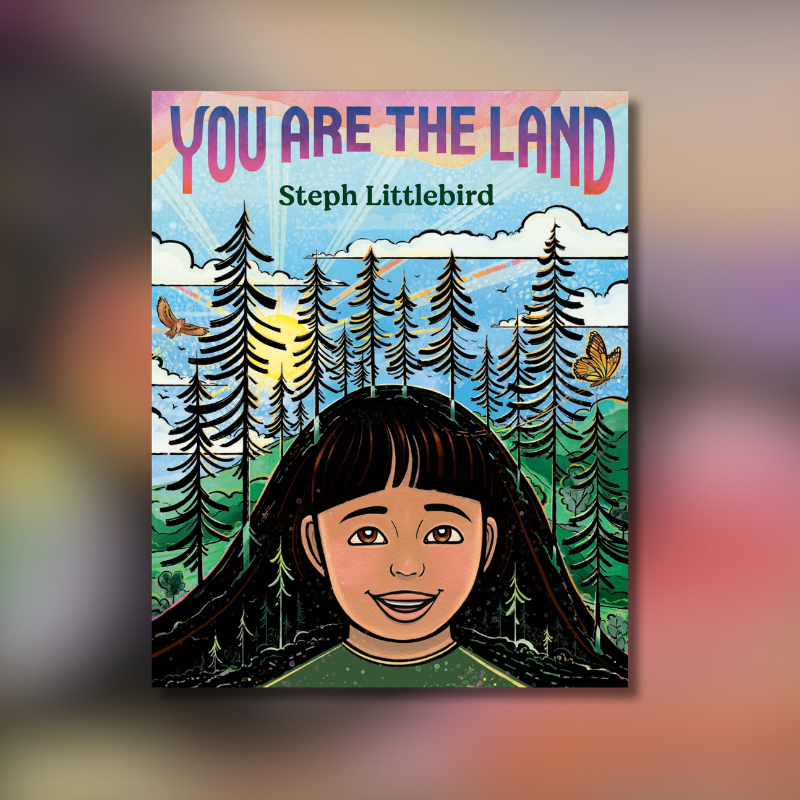
A joyful exploration of a child’s loving relationship with the land that supports and nurtures her as she grows
You Are the Land is a vivid ode to belonging within a family, within a community, and within the natural world.
From the day she’s born, a child feels the love and power that come with being part of something bigger. She’s a new spring leaf, alive and growing, as strong as the ancient cedars and as radiant as the glittering night sky. She is one with the amazing forces of nature that surround and nurture her, and that she nurtures in return.
Through inspiring words and sweeping illustrations, renowned artist Steph Littlebird’s stunning debut celebrates our connection to the land and shows how we perfectly mirror its beauty and resilience.
More:
Visit Steph Littlebird online at www.stephlittlebird.com
Learn more about Boyds Mills and their upcoming programs by visiting www.boydsmills.org.
Transcript:
NOTE: Transcript created by Descript. I've attempted to clean up any typos, grammatical errors, and formatting errors where possible.
Steph: And there is like a lot of going back and like self-doubt and all of that and trying to figure it out. And then, just getting feedback for the first time on a manuscript is okay, you're trying to think about all these different elements that you maybe haven't had to think about before.
And yeah, it was a real challenge, but it was so fun.
Matthew: That is the voice of Steph Littlebird, illustrator of My Beautiful Hair, which was written by Carole Lindstrom, and of My Fierce Aunties, which was written by Laurel Goodluck. And making her author illustrator debut with You Are The Land (Nancy Paulsen Books).
Welcome back to the Children’s Book Podcast, where we celebrate the books and creators who help young readers feel seen, supported, and understood. This episode is brought to you in partnership with Boyds Mills, positively impacting kids by amplifying the voices of storytellers who inspire children to become their best selves.
I’m your host, Matthew Winner—teacher, librarian, writer, and a fan of kids.
Steph and I had a great time in this conversation and I think she is going to be one to watch in the coming years. Exceptionally talented as both an artist and a writer.
Here are a few of the things I learned in this conversation:
NUMBER ONE: Overcoming doubt and remaining hopeful. Steph talks a lot about feelings in this conversation, but the themes of overcoming doubt and remaining hopeful feel like a rhythm with which she has synced up and I admire how this lens impacts how Steph sees the world.
NUMBER TWO: Steph was and is a fine artist and it was her fine art that caught the attention of a literary agent, who then reached out about working in the children’s book space. Which just goes to show you never quite know who’s watching or what the universe has in store.
And NUMBER THREE: Steph is two spirit and indigenous, and you see this come up throughout her work and how she walks through the world. It contributes to Steph’s focus on community and also her vibrant color palette.
So, a little about You Are The Land (Nancy Paulsen Books) from the publisher:
“A joyful exploration of a child’s loving relationship with the land that supports and nurtures her as she grows
You Are the Land is a vivid ode to belonging within a family, within a community, and within the natural world.
From the day she’s born, a child feels the love and power that come with being part of something bigger. She’s a new spring leaf, alive and growing, as strong as the ancient cedars and as radiant as the glittering night sky. She is one with the amazing forces of nature that surround and nurture her, and that she nurtures in return.
Through inspiring words and sweeping illustrations, renowned artist Steph Littlebird’s stunning debut celebrates our connection to the land and shows how we perfectly mirror its beauty and resilience.”
Feel connected and enjoy!
Please welcome Steph Littlebird to the podcast.
Steph: All right. Hi, my name is Steph Littlebird and I am the author illustrator of You Are The Land.
Matthew: Steph, I'm so glad to have you here with me today. Thank you for joining me.
Steph: My honor to be with you, my dear.
Matthew: I, I shared we have more in common. The universe is like not done with us after today. Just so you just so you know what's gonna be happening in our future, I feel oh, the universe has plans and I love that from Carol Lindstrom your work with her and also my connection to her too.
Just how you show up in the world. I'm so grateful to already know a little bit of how you show up in the world and get to have this time [00:02:00] together. But let me ask you, speaking of showing up in the world, what is giving you hope today on this day that we're connecting?
Steph: The thing that gives me hope all the time is community.
And that ranges from my own indigenous community to just the broader community at large. That is, working against the forces that we have currently, that we are facing. And the people that surround me, and the people that care about the seam. Same things that I care about, those are the people that give me hope.
And that's why I do the work that I do is because we have to overcome a lot of doubt and troubling things to remain hopeful. And so I try to practice that all the time.
Matthew: That's wonderful to remind us that it's a practice. I love setting my mind on hope, but I know that I have to make that choice.
And thankfully I get to be around small people all the time and they remind me of hope. But I'm [00:03:00] glad that you share it in that way. I'm grateful that we are coming together around your. Debut as both author and illustrator together for you Are the Land. Could you please share a brief book talk for those folks that haven't encountered this book yet?
Steph: Yeah. So it is essentially the story of a young person who is learning about their relationship to the earth through their family members and their community, and the messages that they're receiving in their environment that tell them about their connection to nature. And I come from indigenous culture where this knowledge is I think in a way taken for granted 'cause it's just part of our culture that, yeah, of course you're connected to the earth.
That's just like who we are and what we do culturally as native people. But that's actually true of all human beings. And what I found through my work as an educator, I actually teach local indigenous history. Is that a lot of people feel the feeling of being connected to nature, [00:04:00] but because they don't come from our culture, they don't really have the language for it.
They don't really know how to describe it. And so I really was hoping that this book would be a way to introduce people to this framework of thinking about themselves as being extensions of the earth. And so it's really just like a way for me to translate this thing that's so special about native culture.
To share it with everyone and hopefully that the story is accessible to anyone who can read it.
Matthew: Can I share that you're causing me to think one of my favorite feelings in the world, Steph, is I grew up in central PA and I love going into a forest and it making me feel small, but you're helping me to reframe.
That feeling of being small is also a feeling of being connected, of being part of, and that's a really important, I think, reframing that that you are part of, you come from and yeah. And you exist. [00:05:00] You exist with perhaps we could say Yes. I've noticed from, browsing your Etsy shop and Fanboying a little bit that, that language of we are, the land comes up over and over throughout your art. That's not a phrase that's new to me. I certainly have heard that phrase used often, but I see its importance for you in just the way that it shows up a lot. Is there a relation to the importance of that language and then you turning focus to making this book?
Steph: So I'm a background in fine arts and I went to school for painting and printmaking and very much have always been into activism and using my work as a way to educate people. And so when I started learning illustration, I began essentially making work more for adults than children and still working through these themes of being connected to nature, but making them for an adult audience because.
My [00:06:00] social media presence is mainly, 18 and up basically. So my agent who she does all of my, kidlets and, just general book stuff for me, she was like, I think that this thing that you do would translate into a kid's book really well. Yes. And I had never written a children's manuscript.
I'm a writer, but I'm an like an arts writer and a tech writer, and so I had to like. Change the way that I approach writing in order to make this first manuscript. And it was a huge learning process, but it was so because. I really do believe that young people are, they're the ones who are gonna have to solve the problems that their predecessors have essentially neglected to solve.
And that part of that solving of that problem is actually reconnecting with nature and understanding our humanity as it is connected to those things. And my hope is that this book will, instill those kinds of concepts [00:07:00] earlier on, which I think, as adults in a world where we're not really encouraged to be connected to the land, that getting it in younger and younger will actually help them be connected automatically and not have to, question that at all.
They can just have it be part of who they are.
Matthew: Yeah. I, I. Because I teach all day and I'm, you're catching me coming from my, my, my end of the week teaching. I, I can't in this moment help but think about the presence of AI and the prevalence of AI and what we as teachers and librarians are wrestling with on.
Is it even okay to be welcoming this into our space specifically? I think those of us that are pushing in opposition are not just focusing on the theft that's happening because of AI in terms of intellectual property and creativity and voice, but also the environmental impact [00:08:00] that just running generative a AI has and.
Are we morally okay with using a it's, I can't say it's a tool. AI is not a tool. Are we okay with running artificial intelligence and knowing that the trade off is that we are harming our clean water, our access around the world to these resources just so that we can produce something faster or offload our thinking to something else.
And I think your conversation is evergreen, but it's causing me to think, oh, this is a really interesting pairing that seems to be happening. I wanna compliment you at how stunning this book is to know that you had to approach writing for children for the first time because you were used to a different type of writing and a different audience for writing.
I think what you did instead was you mind into yourself and realize probably that voice was always there. Because Steph, I'm gonna read to you, if you don't [00:09:00] mind. It would be an honor for me to read to you. Would you mind if I read to you? I should of course ask for permission. No, I don't mind.
Then I'm gonna read to you and others your first two stanzas, which read When I was a Baby, my grandmother sang to me. You are the land, a new spring leaf alive and growing like a maple seed. She teaches me, I'm sorry, my grandmother is like a flower. Her petals wrap around and keep me safe. She teaches me to be strong like the branches of an ancient cedar tree.
When I could talk, my grandfather sang to me, you are the water a raindrop. Your voice is powerful like a rushing river. My grandfather is like an ocean. His tides nurture my family. He teaches me to be courageous like a thunderous waterfall staff. Your rhythm, your stanzas, your structure for this is exceptional.
It's [00:10:00] beautiful. It resonates in a way that, that I think causes us to take beats, but not just a beat to focus on this person in our life or that. But to hear the poetry in the way that person shows up to us and shows up for us and the way that not only their presence being like poetry, but their influence being ripples.
So it just is doing, for me, at least for this reader, it's doing so much. And it's incredible to hear from you that this is your first go at writing for children. I think that you have a heart to speak to children.
Steph: Thank you. That means so much to me. And also, it's the first time I've heard someone read it back to me, and so that was really powerful to hear you read it and how your cadence is.
I think, for me the challenge that I found was the idea of how you should [00:11:00] distill things. It's children's books task are a challenge. Yeah. Because you got 500 words or less, so you better make every single one count. And so that's really the way that I approached it.
And I used the idea of similes a lot through the work. Because I know that's something that young people are learning about when they're getting into these books as well. And so it's a a great tool for teachers if they wanna talk about those things. But I also think that it's just an easy way for young people to acce access the imagery and.
Feel, it's like when you think about an ocean, you not only see the ocean, you can feel it too. And so that's what I was really hoping is that it would not only be like, something that you read the words to, but that you feel those things because nature has feelings with it.
When you go outside and you feel the raindrops on your skin or the sun, you feel it in your body. And I think that's what I'm trying to affirm for people is that feeling is very real.
Matthew: And what a beautiful [00:12:00] challenge or call you, give your readers to attempt to describe nature because that, to me is also a real relationship with nature.
To not be able to just say the ocean is huge, the water is pretty, the waterfall is loud, but to call it thunderous moving a storm in me different. Different similes that you employ also invite us to describe to attempt to describe something, to capture the way, in that moment it really feels to say, I don't know that this word that I'm gonna grasping is enough, but I'm gonna try.
And that you mentioned that the picture book format. Deliberately restrictive. We are trying to speak up to young children and the challenge of trying to distill [00:13:00] something down to its most concentrated form, is something that maybe we take for granted. 'cause when we talk to adults, we can just talk and talk and talk around that thing to spiral in, to get to the core of it.
But with children, we really have to get there and get there as accurately and truly as we can. And I think a poetic voice is a great way to speak truth to something. So well done. Yeah. All done. Did it take you a while to get to, you had your agent saying, encouraging you try your hand at this what was your, I don't know, timeline, to try to find the voice for the book?
Steph: I took a couple, I think maybe like a couple of months of working through it and going back and forth with her. Writing to me is not art writing is something that I've been paid to do in my professional life, but it's not something that I'm actually, to me, feel as fluid in as painting or illustrating.
And there is like [00:14:00] a lot of going back and like self-doubt and all of that and trying to figure it out. And then, just getting feedback for the first time on a manuscript is okay, you're trying to think about all these different elements that, you maybe haven't had to think about before.
And yeah, it was a real challenge, but it was so fun. And what actually when it all clicked for me is when my. Agent was like you write all this poetry in your social media. And I totally, I write poetry for just because it's how my brain works. But I never thought about it as part of the approach to my manuscript.
And then she was like, what are you doing? You're like, overcomplicating this process. And so then I just went to my poetry mind and started writing it like that. And that's when everything clicked in finally. And so she had to remind me that I'm just. I'm at the end of working on a couple more manuscripts right now, and she's you need to go back to your poetry mind, because I tend to go to my technology art criticism mind first.
So it's been [00:15:00] good to go push myself into that practice of poetry.
Matthew: I know that feeling, much of the writing I've done has been in. In the professional world for writing for libraries. Here's why we approach things this way. Here's like pedagogically writing, right? Not perhaps expressively writing and not for children.
It's taken me. I've been now writing for children for probably 10 or 15 years and haven't published something yet. But I have certainly started to find that voice as you're saying, oh, this is a different voice that I have to let myself go into in order to write. Can we talk about your, and who's your agent?
We should name this person.
Steph: Yes, my agent is amazing. Her name is Kathleen Rushal and she works for Andrea Brown Lit lit. And she just she found me she found my social media and it was before I'd ever done books. And she said, I think your work would lend itself really well to this format.
Would you be interested? And this was [00:16:00] when I was approached for Carol's book, my Powerful Hair.
Matthew: Oh,
Steph: cool. And I was like, I was all. Are you? I didn't, at first, I didn't even believe her because I'm an artist. I'm used to people approaching me and not having real good intentions. And so I was like, sure lady.
And then it was like it was real. And she was so amazing. 'cause I said, I've never made a book before. So the publisher would have to. Hold my hand a bit through this so that I can, learn the process. And I worked with Abrams on that and it was so amazing. They were so amazing and it really was like, trial by fire, throw you into the deep end of the pool and figure it out.
But I figured it out and now I'm starting my 10th book right now. And so I feel Congratulations, Steph. Thank you. I feel my work is serving its highest purpose in this medium, and that I am, positively impacting the next generation. That to me is like the biggest compliment that my work could ever receive.
And yeah it [00:17:00] feels like destiny and Kathleen is a huge part of. Essentially transforming my career. Going from fine arts selling paintings is very difficult these days, so being able to work in the publishing industry has just been incredible and really taken my work to completely different levels and places that I could have never imagined.
And so I'm very grateful to her. Forever. Forever. She has just been one of my biggest cheerleaders and champions too. And so meeting someone like that is just so transformative. So I give her all my love all the time.
Matthew: Amazing. When you work for children, you touch the future. I'm so glad you were given an opportunity.
You were pulled in to work with children, to make things for children. I think that's a wonderful thing, and certainly your art translates so well though the color story alone and you are the land. [00:18:00] But as a writer, not an illustrator, I often like to talk about when books hit me this way. How I feel like I could lay out all of the spreads in ui, the land across a wall in the library, a giant like border or something, and I could see the color story it tells, and that to me, I don't know if that's my taste or just the mark of a good illustrator, a great artist, but over and over to me, the books that speak most strongly to me are the ones that when laid out as a whole.
I can read a story just in the way the color is moving. You handle that so beautifully. It's not as if you have a purple page and a green page, whatever. But what I mean by that is just things work. There's a continuity and a flow. And I wrote to you ahead of time that it feels like, but this makes sense from your work in fine art.
But it feels like every spread could be hung up [00:19:00] as a poster. Everything feels designed and not. I'm not trying to talk down to illustrators around there, but it, nothing feels like a filler. It feels like you made every single illustration in this book count, Steph, and that I have to imagine that was some weight on your shoulder to do that, that you might have put there yourself.
But on the other end of it here holding the book, I just wanna tell you, it worked. It worked really well and you've given our eye something different to look at with each spread, and I think that also takes. Awareness as an illustrator, what is this reader's experience going to be as they turn page to page?
Do you, can you recall when you were making this book, can you share some insights on what it was like in your head to be planning out those compositions? Because it doesn't happen by accident. I'm smart enough to know it doesn't happen by accident, but I'd love to hear for you this artist, how that looked.
Steph: [00:20:00] So color is such an important part of my work. And actually when I was in art school as a painter and I was using super bright colors and everything, a lot of my professors were like, why do you do this? Like, why don't you tone it down, and I'm so glad that I didn't listen because I had this thing that I did that set me apart.
And I really love color and I associate really strong colors with the contemporary powwow culture. And so if you go to a contemporary powwow, you're gonna see neons and reflectives and iridescent and everything is just like. Trying to catch your eye. And so my work is really influenced by contemporary indigenous culture and how vibrant it is.
So I, that's always a part of my work. But then there's an element of for me, colors bring emotion colors, reaffirm emotion. And in each spread there's different colors used to re reaffirm what is happening in that, in that page. [00:21:00] So the image of her running to her dad and her hair turning into space.
Yes, I knew, that's, I want that page to have lots of purples and blues because I think of, those like. Deeper unicorn colors as being like part of space colors. And so I really just used each spread as a way to think about the combination of colors. 'cause I also really love to harmonize a bunch of really intense colors together.
And so it is, takes a lot of work, but there is a level of. Even though it is very colorful, it's has a level of sophistication to it that I think young and elder readers like we all can appreciate and we all deserve. Like I don't think that just because it's a children's book. Is it not supposed to be sophisticated, that children deserve to have really beautifully done art, intentional images just as much as an adult reader does.
So I really try to put as much of my [00:22:00] own experience as an image maker, as a designer into it because. I want every kid who reads it to feel the thing that I'm trying to give them. And so it comes through many things, including that sort of flow of color, which, like the gradients really, I think carry you through each page.
Matthew: Look how that's inherent in you as well. Stuff you were made to make, but you are also made to make for children. That's a beautiful thing. I love seeing the universe conspiring in that way to affirm this for you. I'm so glad you're here and in this space and 10 books in, it's incredible. But also just to share it back to you, being able to create works of art and give that to children.
I'm not the first to say this, but a picture book is often a first opportunity. A child has to engage closely with art, and many of the kids that we all teach may never have a chance to [00:23:00] go to a museum, and so being able to bring an encounter like that to children is pretty remarkable. It's pretty great.
Did a good job, man. I'm impressed.
Steph: Thank you so much. I'm so impressed. I appreciate it. You have reflected so many amazing things, so it means a lot to me. I'm my, some of my very first feedback, so it means a lot to hear.
Matthew: My pleasure. I hope you hear it from all types of readers, including those people making books for children as well as those of us that, read, perform these books in front of classes of children. Steph, I'm so thankful not only for our time together, but for our connection. I appreciate that. I wanna ask you this closing question that I ask all my guests, which is, I'll see a library full of children tomorrow morning. Is there a message I can bring to them from you?
Steph: Tell them that their dreams are possible and that they should never let anyone tell them that they can't do it. So I, I have faced a lot, [00:24:00] especially as someone who comes from more modest upbringings coming from a town of 500 people being a nationally recognized artist, was. Totally insane to think that I could be, but I never let go of my dreams and I never let anyone tell me that they couldn't be realized.
And so I do believe that if you have a dream, you gotta hang onto it and never let anyone deter you from pursuing it.