Proof That We Can Go On with Carole Lindstrom

Updated: Apr 26

Carole Lindstrom, author of Red River Rose (Bloomsbury Children's Books) and The Gift of the Great Buffalo (Bloomsbury Children's Books), illustrated by Aly McKnight, joins Matthew to talk about the truth that all things don’t end the way we wish.
Listen along:
About the book: Red River Rose by Carole Lindstrom. Published by Bloomsbury Children's Books.
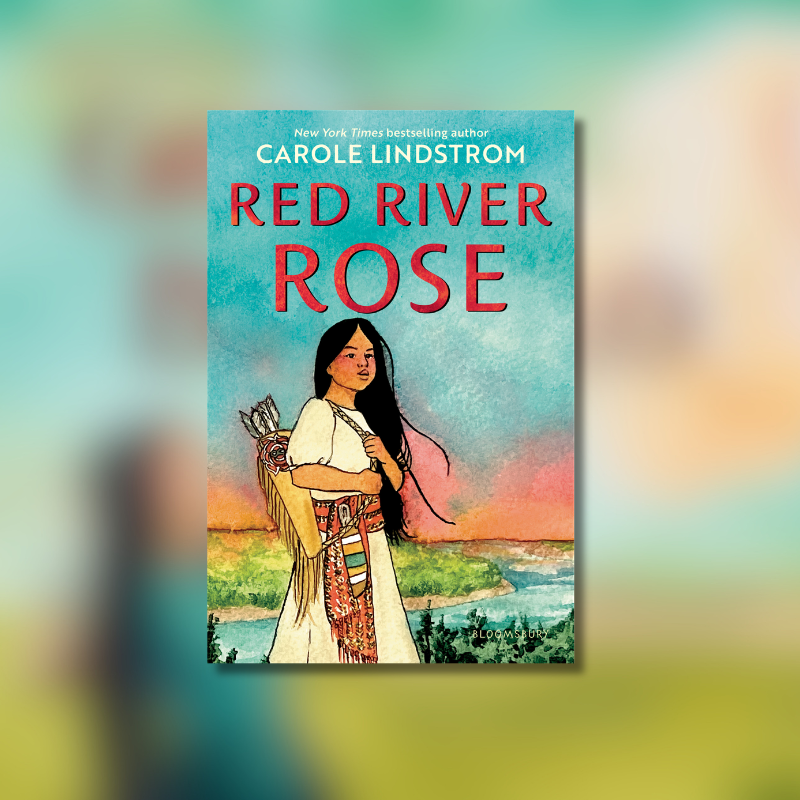
This adventurous historical novel by bestselling author Carole Lindstrom offers readers a dramatic portrayal of a young Métis girl who takes a stand to protect her way of life.
Rose, her family, and the Métis people have lived on the land for generations. She spends afternoons tracking rabbits and gathering roots with her best friend, Ambroise, and her little sister, Delia. She loves to watch the ferry arrive, delivering goods and the latest news to their remote community.
But then Rose's parents start speaking in hushed tones, discussing whether they should “join the Resistance.” When she learns that the government wants to push the Métis off their land again, Rose feels angry. This is the home they love--and the land they tend to with care and respect. Determined to help preserve their way of life, Rose sets out on an adventure that will test her bravery more than she ever expected.
Set amid the Northwest Resistance of 1885, where the Métis people fought to defend the land, this powerful historical tale by New York Times bestselling author Carole Lindstrom illuminates the often forgotten side of life on the prairie.
About the book: The Gift of the Great Buffalo by Carole Lindstrom; illustrated by Aly McKnight. Published by Bloomsbury Children's Books.

Kirkus Reviews Best Book of the Year
Good Housekeeping Kids' Book Award Winner
In this beautiful and dramatic story, bestselling author Carole Lindstrom and illustrator Aly McKnight show readers how life was lived by Indigenous communities, offering the true history of life on the prairie.
Before there was a little house on the prairie, there was a tipi on the prairie.
Rose is a young Métis-Ojibwe girl who has traveled far with her family for the biannual buffalo hunt made up of hundreds of other Métis families. The ritual of the hunt has been practiced for generations, and each hunt must see the community through the next six months. But in recent years, the buffalo population has dwindled, and after days on the hunt, there are no buffalo to be found. Can Rose help her family find the herd that will enable them to survive the long winter?
More:
Visit Carole Lindstrom online at carolelindstrom.com
Learn more about Boyds Mills and their upcoming programs by visiting www.boydsmills.org.
Transcript:
NOTE: Transcript created by Descript. I've attempted to clean up any typos, grammatical errors, and formatting errors where possible.
Carole: As a teenager, I was, so again, it shows like I didn't grow up at powwow.
That was forbidden. You didn't do those things. That was, you would've been arrested. Like it was illegal to be an Indian quote native. I was illegal for me to be who I was. A kid I just grew up with. The shame of kids would do this. Me, and. Wow. I just I can't be who I am.
I am ashamed. And then those books like that did help. They just further reinforce the fact that I was not welcome
Matthew: That is the voice of Carole Lindstrom, the author of We Are Water Protectors and My Powerful Hair. Carole is making her middle grade debut with Red River Rose (Bloomsbury Children's Books). She also published a picture book companion to Red River Rose titled The Gift of the Great Buffalo (Bloomsbury Children's Books), which was illustrated by Aly McKnight.
Welcome back to the Children’s Book Podcast, where we celebrate the books and creators who help young readers feel seen, supported, and understood. This episode is brought to you in partnership with Boyds Mills, positively impacting kids by amplifying the voices of storytellers who inspire children to become their best selves.
I’m your host, Matthew Winner—teacher, librarian, writer, and a fan of kids.
Oh my goodness I love Carole Lindstrom. I had forgotten how soul-revitalizing it is to speak with her. Carole, to me, can do nothing without caring a great, great deal. That’s not a quality I come across in many people. But Carole’s sensitivity comes through her unwillingness to compromise or go quiet. And that makes her incredible in my book.
Here are a few of the things I learned in this conversation:
NUMBER ONE: All things don’t end the way we wish. This is how resilience is fostered. Carole reminds us that you can put forth a tremendous amount of thought and care and effort toward changing something, but things can still go away from what was planned. And that is the way life is sometimes. But it can also be a source of resistance and of resilience. Carole shows this to her readers through Red River Rose.
NUMBER TWO: Nature is grounding. I love that Carole talks about this for her. That smelling the air, feeling the breeze, pressing against the ground, acknowledging the living things around us… all of this is grounding, and, I would add, needed to continue on as humans in the world and experiencing the world.
And NUMBER THREE: There’s always hope. Nothing more to say on that one but to repeat it: there’s always hope.
So, a little about Red River Rose (Bloomsbury Children's Books) from the publisher:
“This adventurous historical novel by bestselling author Carole Lindstrom offers readers a dramatic portrayal of a young Métis girl who takes a stand to protect her way of life.
Rose, her family, and the Métis people have lived on the land for generations. She spends afternoons tracking rabbits and gathering roots with her best friend, Ambroise, and her little sister, Delia. She loves to watch the ferry arrive, delivering goods and the latest news to their remote community.
But then Rose's parents start speaking in hushed tones, discussing whether they should “join the Resistance.” When she learns that the government wants to push the Métis off their land again, Rose feels angry. This is the home they love--and the land they tend to with care and respect. Determined to help preserve their way of life, Rose sets out on an adventure that will test her bravery more than she ever expected.
Set amid the Northwest Resistance of 1885, where the Métis people fought to defend the land, this powerful historical tale by New York Times bestselling author Carole Lindstrom illuminates the often forgotten side of life on the prairie.”
AND there’s an audiobook adaptation! Here’s a preview from the publisher!
[Audio clip]
There’s always hope! Let us share it with you, listeners.
Please welcome Carole Lindstrom to the podcast.
Carole: Hello Anine. My name is Carole Lindstrom. My pronouns are she her and I am a citizen, a tribally enrolled citizen of the Turtle Mountain Band of Ojibwe.
And I am also a mem a, a citizen of the Red River Metis. I'm happy to be here with you.
Matthew: I'm happy that you're back. It's been a minute.
Carole: Yes, it has. It's been like, I don't know what, like six year. I don't know what, wow. I, yeah, time flies.
Matthew: It does, but I will tell you, I've carried you right here in my heart because when we last talked for probably we are water protectors.
Carole: Yeah.
Matthew: You had mentioned that you were local to me. I forever then carried that book as a, this is a person who I could see one day and that matters to me to know. I think for all of us, for kids, it matters to know that there are [00:01:00] authors that are around them, that they can actually meet the person behind that book.
It no less matters to me that there's a person that I risk. Back their voice as a writer and their presence in a community. And also I could see them one day. So I'm Same
Carole: you, I say the same for you.
Thank you. Thank you so much. That's very sweet. You, you are right. You're so right about children and so yes.
I, when I do school visits, you see it all the time when they meet you, and I still don't believe it. It's what do they wanna, even though I tell the teachers that's how excited to meet you, even on a virtual. Yeah. If I do world read aloud day or whatever, they're, I'm like, no, you can't wait to meet you.
And I'm just like why? It's just me. But no, and I just, whatever. That's awesome. And I love it. And I never take it for grudge because really. That's one of the best parts of being a writer. Kids, when they ask me, what is your favorite part? Oh, like this right here talking to you, the kids. It's like everything.
Just
Matthew: It's awesome
Carole: giving them some time. Yeah.
Matthew: Yeah. Even as a [00:02:00] librarian I teach them every single day, and yet I still tell them. Oh, one day I'll be a published author and one day I'll be invited into schools. And even though I'm used to seeing all of you, it'll be different. It'll be a different hat that I'm wearing and that matters.
Everything matters. Being in front of
Carole: them
Matthew: matters.
Carole: And see, and you, and they see you saying that though. And they see you striving for that, and that they realize that they can have that too. One day. That is also possible. And then when they say us as authors and illustrators and we say, this is you.
Like I am you. Like I could be. I was you.
Matthew: Isn't that the truth?
Carole: Yeah. Just that I,
Matthew: I don't take for granted that I'm a queer man in front of these children and whether or not I'm that out in front of them, I don't need to be out in front of them. I'm their teacher.
Carole: Yeah.
Matthew: But
Carole: I
Matthew: am. A model of something for them.
They look at me and see something in me.
Carole: Yeah.
Matthew: And some of those kids I know see a future by seeing me existing and [00:03:00] I don't take that for granted. 'cause again, that I, young Matthew, 10-year-old, Matthew 8-year-old Matthew, really could have used being able to see a future in some of my teachers in that specific way.
Carole: For sure. Oh yes, for sure. I don't even know how is you know what, like I think for me, if I think back, where did I I didn't see this any like growing up, where did I see it? You know where I thought I saw it in librarians and teachers. I promise you. And the library. I was at the library 'cause it was down the street from my house.
And I, as a child, I would go there Saturday, Sunday, no question about it just escaped my home life. So it wasn't so good. And my dad. But, and I knew I'd be safe there. I knew that anything, I don't know, books just gave me so much comfort and I knew that any questions I had I, the library would have the answer.
Love. All I had to do was sit in the stack and pull books out, which I did, and sit on the floor. I'm like, why does this [00:04:00] work this way? Or whatever I heard about it was interesting Hey, I need to know more about that. I know where I'll know, I'll go the library because that's the place and it still is, like for me, I still go to the library like at least once or twice a week.
That's, I just, even if I don't, I get a book. I wanna be there. Just want my presence to be there for the librarians. Just, and I usually do get books just 'cause I like to eat, keep them in circulation.
Matthew: Yeah. I'm catching you at such a good day. I love this. I love that. We just get to be excited to be together.
Yeah. But let me ask you as a person who is in and of this world, Carole, what's giving you hope today?
Carole: Oh I was thinking about that. I think for, we've had a lot of rain where I am, and the rain is really. It's caught. We have seen so many, there's so many flowers popping up now, like daffodils and tulips and that.
It's really giving me hope. Is seeing spring. I think spring is hopeful, a hopeful time of year where, you know, [00:05:00] baby birdies and bunnies and all these things are being born and green and life is coming back and it's always nature is always very liked. Grounding in that way that we, like it just keeps you present in the time.
And I think it's always hopeful. Always hopeful. Nature is. Yeah, that's it.
Matthew: I. I'm grateful for you to have used the word grounding. That's a wonderful word. That gives a sense of place and gives a sense of existence and of mattering. That's terrific.
Carole: Yeah. Grounding.
Matthew: Hey, we waited long enough to talk that we're not talking about one book today.
We get to talk about two. Isn't that wild?
Carole: That's
Matthew: weird and it's so funny. But I. I would love to ask you first, I think about the novel. Can you share a brief book, talk about Red River Rose for readers that haven't encountered it yet?
Carole: Oh, sure. Yes. It is a middle grade historical fiction novel of a young Metis girl that [00:06:00] is taking a stand for her people and her way of life.
It is actually based on the Northwest resistance which happened in 1885, and it's happened in Canada. Also based on my ancestry, my ancestors fought in the northwest insistence against the Canadian government for their, our land. Their land. And so that, it's also, that was, that's really basically the story.
And she's helping her family and her community and, just trying to keep their home. And yeah, I just, it's novel. I guess it would say it was probably modeled after me as a child and, if I could have been a child of that time, I would've, this is what I would've been wanted to do to help, even if it didn't change the outcome.
'cause it doesn't, I can't change that in the historical fiction world. I wasn't going to, because all things aren't, they don't end the way, sadly, that we wish they could. That's just the way life is and that's the way historical fiction is, right? I kept [00:07:00] the historical part.
But there's always hope and that I think that's one thing I tried to do with Red River Rose. It's a end on a message of hope and that it doesn't matter, even though things can seem very Grimm. At the time they are like that. No matter the situation, maybe for whoever it is, there's always hope.
There's always a hope of a new day, of a new spring of nature and things going on and that we could go on in somehow and maybe a different way, but it's still a way. And whatever that, that's our journey now. Our journey's just changed. That's okay. Because that's what life is a journey and it's okay that it's not the same always, I think, and whatever,
Matthew: but that we're here to carry it forward.
Carole: Yeah. We have to. We have to find hope someplace and always other ways you do. You're right. I wouldn't be here today to write the story if my ancestors wouldn't [00:08:00] have. Have become rogue allowance people or would've left and they went to Turtle Mountain and become they're found there at there, that's where my relatives were.
And so they're all over there. We were across the 49th parallel. And, that didn't really mean anything to us as people, we were, we followed the buffalo and we followed the food and sources into wherever that time of year. If it was winter and it was spring we went where the food was and wherever that was, that's why we lived in, teepees in the prairie or we lived in wigwams in the forested areas and whatnot.
But we were always moving, but always to follow the food and whatever that. So anyway, and so we didn't look at those things as anything. But it, became a part of this story because that it's my history. And yeah. So that is just a anyway, yeah.
Matthew: Talk to me about why write a middle grade?
Why this story? You have this companion picture book. Yeah. The Gift of the Great Buffalo that came out a couple months [00:09:00] earlier.
Carole: Yes.
Matthew: I guess in my mind I wondered just for, from you as an author's perspective, because Red River Rose is your first middle grade novel. Yeah. Just, which came first, or was there always the intention to tell them side by side or?
I'm very interested in the craft of ideas becoming things.
Carole: Yes. Life. The, how they became to life. They actually, the picture book was first to give to the Great Buffalo. And, after the book was done, I think even during the process, of seeing the sketches come to life, I had always wanted to do a middle grade.
And my editor, ed Bloomsbury knew that, and I always wanted to do, little house on the Prairie through an indigenous lens, the prairie life, but through, because my people were living that same existence at the time that Laura Ingles was living in the Prairie in 1885. That was roughly the 18, late 18 hundreds was the time, Dakota Territory.
[00:10:00] Which, is just a bit further south. But nevertheless it's, it's still the same landmass Turtle Island is. We call it is the indigenous people north, the North America. So anyway so then I was like, we both decided, we really liked the family a lot from the picture book.
I, especially as we saw them come to life and we're like, I don't know how it just naturally flowed, it seemed, it just, this would be really great. Middle grade historical fiction, and so then I, my task kind of was to think about in marijuana to have a conflict. What is going to be the driving conflict and this story Then, you know what, okay.
So as I was researching my really all the books, like I probably read over a hundred books. Thankfully there was really great resources on my Metis ancestry and Metis in general in Canada. So I did a lot of research and. Found a lot of my relatives names and these stories, which, and some, it was very hard for [00:11:00] me emotionally seeing some pictures of them in shackles, because they were arrested by the kid, the re the Canadian Mount and Royal Canadian Mount of Police.
And I was like, I don't know if I can do this book. It was very. Painful. It took me three years because I took me longer than I think the editor would've liked. But I many times said I don't know if I can do this, but I knew I needed to do this because I think this is a part of history, even though it's, but it is history of, at the of a time when even a Laura Engel's life was going on in Little House in a Prairie, which was a book.
I grew up with the series as a child and in many ways that book I loved so much. I loved the family. I love the connection of Paul and Laura. 'cause I did not have that with my father.
And I wanted that so that, so I really loved. That I loved the sisters. I was everything about the story except how they viewed me as a native person.
And I saw [00:12:00] it in the pictures. I saw it in the words. I saw it in what they said about me. I saw it in how they would say things like, even the dog hates Indians. And it's just wow, how
Matthew: isn't
Carole: that so complicated? Oh yeah. Especially when your parents, your mother, who's, my mom was fully native, didn't know enough about it to explain it to me herself because she my grandmother, her mother was forced into Indian boarding school.
Matthew: Ah,
Carole: so then of course, all of our history, all of our language, all of our culture, all of that stuff was erased, gone. And it was ashamed. You were ashamed to be who you were native and who you were, and you just, who you were programmed not to be anymore by the, missionaries and so forth.
And so my, I, it was a very much a struggle, me growing up as a. A child as I'd ask my mom things and my mom would say, oh, I don't know. I'm like, but how do you not know if that's who we are? Of course, I didn't know any of that till I got older and started doing research and realizing that's why mom didn't know.
Of course it was by design, obviously, and [00:13:00] most people don't even know this today when you talk about it in education. There was a reason why people don't know. Actually after 1900, all of that was totally. Dropped. Nothing was spoken about us sitting longer like we just died off. And people would say that to me like, thought we kills you all.
Oh my God. There's like, how? Like they would actually say that to my face. Sorry, you know you missed me, but man, that shit hurts. I shouldn't say that sort. That stuff hurts after a while. When you hear it, it's geez man, I. So there's a reason, like deliberately in textbooks and so forth, that they, we were in the past, that's in any books I saw in that time frame and when I grew up were natives, were in loincloths and buck skin and in sy bows and eras and weren't part of society.
But that as my mother was part of society, I was part of society. It was so confusing to me.
And so I finding all this out. Of course, my [00:14:00] mother passed 20 years ago and never knew anything like I know now, I wasn't able, 'cause I didn't know myself, it's funny not funny, but it's interesting when I tell people that.
The F quote, freedom of Religion Act, which was the act that was allowed me to wear these earrings, anything, indigenous beaded earrings, jewelry practice, my spirituality, however, anything was 1978. I was 14 years old.
Matthew: Wow.
Carole: As a teenager, I was, so again, it shows like I didn't grow up at powwow.
That was forbidden. You didn't do those things. That was, you would've been arrested. Like it was illegal to be an Indian quote native. I was illegal for me to be who I was. A kid I just grew up with. The shame of kids would do this. Me, and. Wow. I just I can't be who I am.
I, I am ashamed. And then those books like that did help. They just further reinforce the fact that I was not welcome
Matthew: in Carole, this [00:15:00] society,
Carole: Carole,
Matthew: We talk about first thank you for sharing that. You're welcome.
Carole: Thank you for letting me.
Matthew: Oh, of course. We talk about in, in our anti-racist, anti-bias work that all of these systems in America, our system of education and our healthcare system, all these systems, function on benefiting white people and putting down everybody else. It's racism baked in, right? Yes. And yet the love, the compassion. I'm trying to find the word that you have for your mom to say she didn't know. Because the system worked. The system worked to make, not to make people forget, but to stamp it out.
I, yeah. Maybe there's some healing going on for me as well too. Not to project onto you, but I'm hearing this going. Why didn't I know about this? But
Carole: a reason? Yeah.
Matthew: There's a reason why I didn't know. And it was by design. By design. So how great that you are able to also write.
Carole: Yeah.
Matthew: Native [00:16:00] stories that take place in the past, but draw a line to you in the present.
Carole: Yeah.
Matthew: You're right. Beautiful. Beautiful thing.
Carole: Thank you. I appreciate that. 'cause it really it really gave me, and here's the thing that I think is just absolutely positively. 100% universal for children, no matter their color, their sexual orientation, anything. Children want to be superheroes in their lives and their families.
And that doesn't mean wear a cape. That doesn't. It means that, because I think of myself as a child, just let me be part of helping, even if what I do to help doesn't result in any change. I think 'cause someday those children are gonna grow up. That's the idea. And when they do grow up 10 years down the road, so their teenagers or twenties and the family talks about their history.
'cause they do at the tables when they get together and they [00:17:00] say, remember when we fought against the Canadian government or whatever, we fought against whatever we were struggling with. Dad or mom got laid off their job, whatever. The child could say, and remember when I did this, because it doesn't matter.
It doesn't matter. It doesn't matter that they got laid off. It doesn't matter that they got lost their home in their land. You know what I'm saying? It doesn't it can't be fixed now. There is no fixing it. It is what it is. But that child has a sort of an onus, they have some onus in that they have what a agency, and be part of trying to save their land.
Yeah. And I think that all children want that no matter what it is.
Matthew: I, I agree with that. What storytellers we are. Remember when
Carole: this
Matthew: happened to us?
Carole: Yes.
Matthew: Here we stand now. Yeah. Remember when that was there? That is that not how. We make resilience. Are those not the seed we plant for resilience? Yes. To be able [00:18:00] to remind children and remind ourselves?
Yes.
Carole: Yes.
Matthew: We come from somewhere else. We come from a people. We come from a past. Yes. We come from a history
Carole: and we owe that to them. Really? We owe it to them.
Matthew: Yes,
Carole: because they did it to us. For us to let us be here right now. We owe them that and chil and that's, yeah. Oh, children, with sometimes I feel adults just do not have nearly enough respect.
And I think you see it in, in ways when children act out and stuff. But I think that comes from lack of sort of a respect for children. And they're brilliance really. They're brilliance. And seeing the world through completely un jaded eyes, just the eyes that see. Through the adults. They're faults and they're things that they're too proud to even admit and say, listen, I was wrong.
I messed up. I don't, I'm sorry I did that to you. I'll never do it again. I messed up. Please let, forgive me, first of all, forgive me. He's for, 'cause like when he, I don't think we do [00:19:00] that as parents enough to children. Forgive me. Forgive me for what I did, how I hurt you for I, my parents never did that to me.
Ever. Oh,
Matthew: but
Carole: did
Matthew: you not do that to your.
Carole: Always child
Matthew: now.
Carole: Hundred percent. I do
Matthew: that with mine now where I'm saying I have a 15-year-old and an 11-year-old. Yes. And I find myself saying to him. I don't know. Yes. What mistakes I'm making now with you. No, but I guarantee you that I'm one, trying my best, and two, if I fault you, I'm gonna try to fix it.
If I, and tell me what can you harm? Tell me please. I
Carole: wanna
Matthew: fix
Carole: it. Tell me what I can do. Tell me what you, I am failing at. Tell me where I am. Like not meeting your needs. That's so I've got to, I've got to meet your needs. It's critical. Because they're not. You're not me. I wish, we're not clones.
You're your own person now. And I have to I have to honor that always to honor that, always that there're special people, all children, there're special union [00:20:00] people. And Carol, I
Matthew: don't often get this when I talk to a guest. I wanna give this back to you how grateful I am that we're talking.
Carole: Thank
Matthew: you.
Me too. I came into this with this list of questions.
Carole: I know
Matthew: I audience doing it. The audience doesn't see my list of questions. You are answering every single one of them. Oh good.
Carole: I'm glad.
Matthew: So glad. So let me bring in some of my wording so that those listening who have not yet encountered this book can connect some of the pieces.
I am blessed to be able to connect 'cause I'm hearing you. Thank you. This novel revolves around this kid Rose who. Has one foot in childhood and one foot in adulthood. In that way, it's very much a coming of age story. It's not Rose becoming an adult, but there's some stuff, there's some conflict that, as you're saying, when given the opportunity, kids will step into their power, step into the opportunity to be a hero, and Rose sees that opportunity here and is pushing against her parents.[00:21:00]
To allow the opportunity, let me step up, let me do it.
Carole: Yes.
Matthew: And those parents you've written have lovingly protected her.
Carole: Yeah.
Matthew: But because of the conflict that happens in this book and the threat to her people that happens in this book and that we have adults in this book that in front of Rose. Her parents are questioning whether or not we can trust the integrity of those adults.
What a beautiful thing to model that to children. That it's, and to parents that it's okay to let our kids in on some of this. Yes. Where we question other adults, it's okay for my kids to, I wish my parents
Carole: would've did
Matthew: it. Yes. Yes. It's okay for my kids to know that I don't trust every adult and here are the things that I'm looking for in order to protect you.
Carole: Yeah. A hundred percent. A hundred percent. I feel the same. Yes. I that we don't, I That's exactly why I love that you see these, the [00:22:00] kernels of things That is exactly why, what was in my mind when I was writing this book, exactly those pieces.
Matthew: Can I give something else back to you? Yes. Because it was something that I didn't write in my questions.
Carole: Sure.
Matthew: The goodness. It came back and it came back and it came back in your book, and I think it was by design the Canadian Army. Has a weapon That's a new weapon of its age. Yes. New In the past 10 or 15 years, I went and looked it up because I was so curious about it that the Gatling gun
Carole: Yes.
Matthew: Was new then.
Carole: Yes.
Matthew: And the way Rose talks about they have this weapon that can just. Not stop firing. You don't have to reload. And knowing the threat to Rose I, this reader could not help but think, what weapons do we have today in the present that are unfathomable?
Carole: Yes.
Matthew: The destruction they could cause. And then knowing what do we do because [00:23:00] we know that.
Groups of people have these weapons, whether we have these weapons and we're threatened, threatening to use them on other people. How do I square that? What do I do about that? Yeah, what a beautiful piece. Detail to work in. I frankly, kept going, please don't fire. Please don't fire the kids. Yeah, whatever.
Whatever goes on. Please don't let this be a story that kids are gonna, I don't want that. But no way. The threat doesn't go away. And wow. Does that compel the reader through this story in my experience is knowing there, there's a plot point that we, kids are gonna have to. Think about what we can do.
'cause we can't just let our parents go off and try to take care of this on their own. It is a threat to all of us. What? Yes. A powerful, and in that way, universal plot line you've written for your readers.
Carole: Thank you for saying that. And and what I'm thinking about, like what you're saying about things like now and the weapons that we have now, and oh, [00:24:00] these children if put themselves in this position.
No, but they're in it anyway. They're going to be in the they're going to lose their they're, this is the life and what about children today? Are they not? Are they not in it every day? Of course they're, yeah. So it is reality. It is reality. And I think being able to do what you can to.
I don't know. I just see, and I think I, in reality the real story, too is Rose and her, the story of Rose, but the actual story is as Metis people, they were like Manitoba. Red River is where we orient, that's our home that where we orient, we began and then we were pushed further northwest by the Canadian government.
And that's where, how we ended up in Saskatchewan and bat ache. And so that's where again, we, there was like maybe 10 years of maybe peace. And then it was, oh God, they're coming again. They want our land here and they're gonna start [00:25:00] surveying it. And the Canadian railroad's coming through and that.
Gonna just, it's all they're ringing in, the settlers and they want the land and all of that's just completely. Nothing. And the Canadian government wouldn't negotiate or speak to the provincial government, the Metis government, my people's government. And we had these are things we want.
We wanna keep this our land. We wanna have our des to our land. We don't wanna, and they're, no, they, became, that's why I became this, because they wouldn't listen to us. They wouldn't take Louis Al and Gabriel Dumont. They wouldn't, negotiated would nothing, nothing would happen. And it just became, we're old school, we're gonna have to take a arms because it was not, we're not giving up our land peacefully again, we're not doing it.
Yeah. Yeah. And anyway, so it is a true story about what happens in the book. I don't wanna give away the flop why, but I actually again, made it young. The young people who were there. The stars [00:26:00] of the show.
Matthew: Yeah,
Carole: because that would've been me. If I could have did it, you could
Matthew: have done
Carole: it. I
Matthew: love that. I can hear that in your spirit in talking to you now.
Carole: Yeah,
Matthew: I can. I can hear Rose in you. Yeah, it's beautiful.
Carole: Thank you.
Matthew: I am so grateful. For our time together, Carole, I hope you do. I hope that we do this again,
Carole: same
Matthew: sooner than six years. I'm sure we will.
Carole: I'm writing a second book to Rose, so maybe,
Matthew: maybe. No kidding.
Carole: No, I yeah. So
Matthew: we have to talk soon.
You you have brought such terrific people into my life. Before I let you go, before I get asked my closing question, I wanna acknowledge that you brought Mikayla God into my life. And you actually brought Steph Little Bird into my
Carole: life because of Oh yeah. God, I love her. I'm telling you, she and I are just like peas in a pod.
I am.
Matthew: Isn't she wonderful?
Carole: Oh, I adore her if I like told her my, she's my best bestest friend ever. 'cause Oh, I could tell her anything and I trust her and vice versa. And when we just have a really lovely time together, we just, I love her so much. So I'm glad [00:27:00] you see the,
Matthew: oh yeah.
Carole: The essence of her too.
We, she, oh, we, it was
Matthew: immediate. It was a familial connection immediately.
Carole: Yeah. Yeah. So I told her, she reminds me of my mother. I said, my mom sent you to me as a gif.
Matthew: That's beautiful.
Carole: I really believe it.
Matthew: That's beautiful.
Carole: Thank you.
Thank you for today. Thank you for everything really, Matthew, it was so great to see you chat.
Matthew: Thank you for being in my life, Carole.
Carole: Me too. Ditto. Dito. Dito. Ditto. You take good care of yourself. Okay,
Matthew: Yeah. I'm gonna bring you to my library here. I know, yes,
Carole: please.
Matthew: I know, you know that I do bring these messages to my students and it's such a gift to be able to do that. Carole, I'll see a library full of children tomorrow morning.
Is there a message I can bring to them from you?
Carole: Yes. I would say that remember that rain leads to flowers and spring, and also to be kind to yourself and be kind to each other. That's really what I would say. I love you and I [00:28:00] am always, I just, I'm proud of them. I'm proud of them. I'm proud of them for everything they do.
And yeah, in the baddest days and the worstest days, I need to doubly more product.